Brake system maintenance
Brake disc resurfacing — when is it needed and when should the disc be replaced?
Steering wheel vibration, a pulsating brake pedal or grooves in a brake disc are reasons to have the braking system checked. In some cases, resurfacing is appropriate, but the decision must follow measurement and diagnosis.
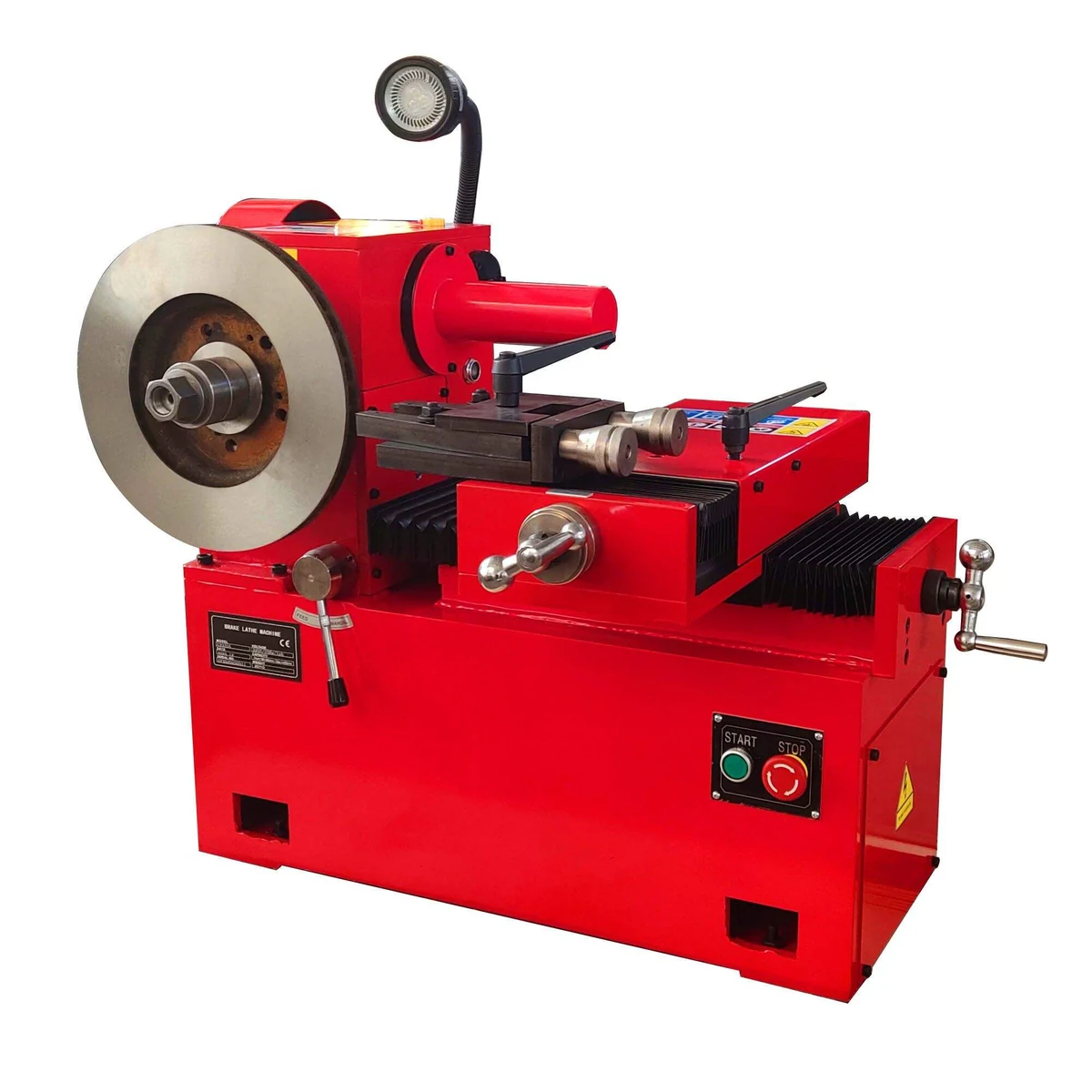
Resurfacing may remove certain surface defects if the vehicle manufacturer permits it and enough disc thickness will remain afterwards. Cracked, excessively worn or severely damaged discs must be replaced.
What is brake disc resurfacing?
A brake disc works together with the brake pads. Over time, its working surfaces may develop grooves, uneven wear or other defects.
Resurfacing, also called machining or turning, removes a controlled thin layer of metal with a specialist machine. The aim is a working surface that meets the manufacturer's requirements. As machining reduces disc thickness, a visual inspection alone cannot determine whether it is suitable.
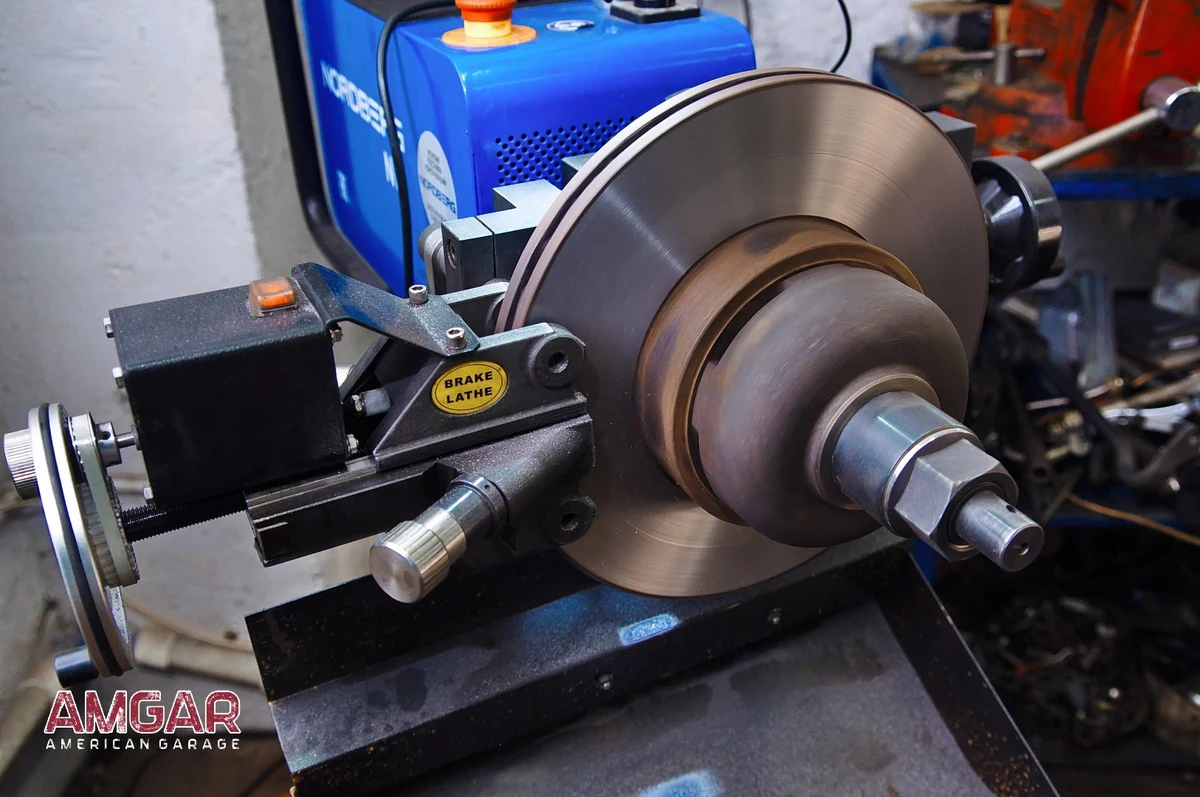
On a bench lathe, the removed disc is mounted on suitable adapters and its working surfaces are machined with cutting tools. Correct mounting, the specified surface finish and final measurements all matter.
When might resurfacing be appropriate?
Steering wheel vibration or brake pedal pulsation
Disc thickness variation or lateral runout is one possible cause. However, these symptoms do not always come from the disc alone: the mounting surfaces, wheel hub, bearing, caliper operation and other relevant components also need inspection. Machining without correcting the underlying cause may not provide a lasting result. Bendix explains disc thickness variation.
Moderate grooves or uneven surface wear
Resurfacing can be considered if the defect can be removed within the permitted machining limits and the disc will still meet the manufacturer's specifications. Deep grooves may require too much metal to be removed, making replacement the better choice.
Assessing the disc when fitting new pads
When pads are replaced, check disc thickness, surface condition and runout. Every pad replacement does not automatically require disc resurfacing. A sound disc that meets the applicable requirements may not need machining.
When should the disc be replaced?
- It is at or below minimum thickness. No further material should be removed.
- It has cracks or deep damage. Resurfacing cannot substitute for safe replacement.
- There are signs of serious heat damage. Spots or discoloration need professional assessment; machining is not always a remedy.
- Insufficient thickness would remain after machining. The specific vehicle manufacturer's limits and a suitable allowance for subsequent wear must be respected.
When replacing discs, follow the manufacturer's instructions on replacement in axle pairs, pad condition and bedding in. Brembo's guidance on disc inspection and replacement.
Why must thickness be measured?
There is no universal minimum thickness for all discs. The limit depends on the disc and vehicle and should be checked against the disc marking and the manufacturer's technical data. Measurements are needed at several points, before and after the work.
Being thicker than the “MIN TH” marking does not, by itself, mean that a disc can be machined. Check the permitted machining limit and the remaining wear allowance. Runout, thickness variation and surface finish must also meet the specifications for the particular model.
What should correctly performed work achieve?
If the problem comes from a surface defect that can be machined within specification, proper resurfacing may improve pad contact and reduce braking vibration. This requires diagnosis, suitable machining, correct installation and final checks.
Resurfacing cannot restore every damaged disc. If braking performance has noticeably deteriorated, have the braking system assessed by a specialist before using the vehicle further.
Brake system maintenance
Resurface or replace the disc?
Send your vehicle make, model, year or VIN and describe the problem. The suitability of disc machining requires inspection and measurements.
Monday–Saturday: 09:30–18:30 · Sunday: 09:30–15:30