Brake system maintenance
Brake fluid replacement — why and when is it needed?
Brake fluid needs periodic replacement. Learn why its properties change, how the correct fluid is selected and what a professional filling and bleeding machine does.
Replace brake fluid at the interval specified by the vehicle manufacturer. Around two years is a common general guideline, but the service schedule for the particular vehicle takes priority. Colour or pedal feel alone cannot establish whether the fluid is fit for use.
What does brake fluid do?
In a hydraulic braking system, the fluid transmits the pressure created by pressing the pedal to the brake mechanisms at the wheels. It needs the correct boiling point, viscosity and compatibility with the system's materials.
Why does brake fluid need replacement?
Common glycol-based DOT 3, DOT 4 and DOT 5.1 fluids are hygroscopic: they absorb moisture over time. An increasing water content lowers the fluid's boiling point.
Under high temperatures, vapour bubbles can form. These bubbles compress and interfere with effective pressure transmission. Moisture also promotes corrosion. Fluid replacement is therefore part of scheduled maintenance; it should not be postponed until braking deteriorates. Bendix on fluid types and moisture.
When should brake fluid be changed?
Check the vehicle's service schedule first. A roughly two-year interval is often used as general guidance, but the initial and subsequent replacement intervals can vary by model.
- The manufacturer's interval has been reached. Low mileage does not automatically remove a time-based maintenance requirement.
- The replacement history is unknown. When buying a used vehicle, check service records and have the fluid assessed.
- Testing shows that the fluid is unsuitable. Results must be assessed using the relevant test method and requirements.
- Hydraulic system repairs have been performed. The need for replacement and bleeding depends on the work and the manufacturer's procedure.
ATE's technical documentation also stresses following the vehicle manufacturer's instructions for fluid specification and replacement intervals.
How is brake fluid changed with a machine?
A specialist machine supplies fresh fluid to the system at a controlled pressure. Old fluid flows from the appropriate bleed points into a collection container, and the system is bled. Working pressure and the order of the procedure must follow the instructions for the particular vehicle.
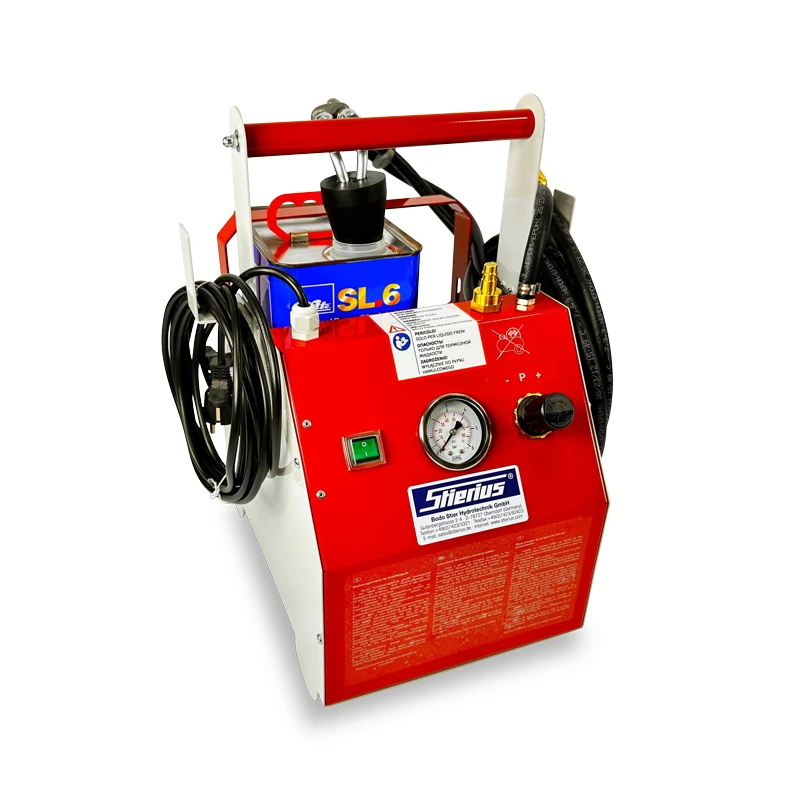
The main photo shows a Stierius VARIO 5 II, an example of a brake filling and bleeding machine. The pictured model's purpose is described on the manufacturer's website.
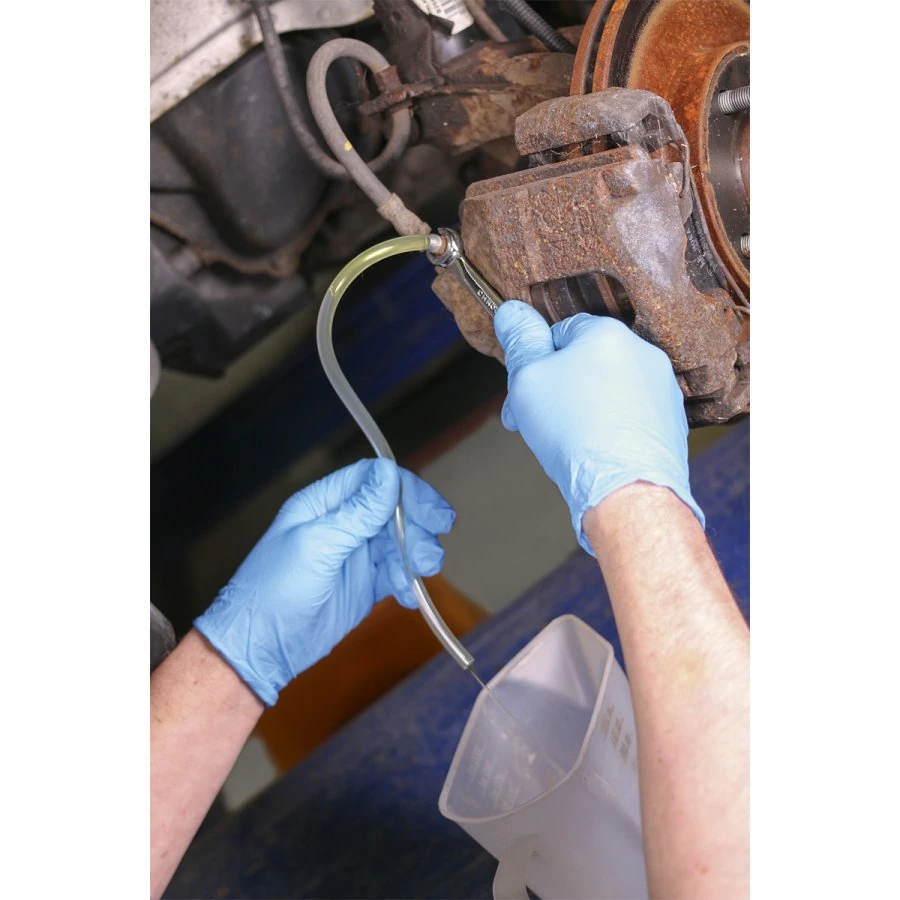
Correct service includes selecting the right fluid, bleeding the system, checking the level and for leaks, and assessing pedal operation. Some ABS/ESP systems require a special procedure using diagnostic equipment. Using a machine alone does not guarantee that the job is performed correctly. HELLA's technical guide.
Which fluid is needed: DOT 3, DOT 4 or DOT 5.1?
Use the specification required for the vehicle. A higher DOT number is not automatically a better choice: the vehicle may require a low-viscosity fluid or an additional approval. Check the service documentation and the fluid packaging.
DOT 5 and DOT 5.1 are different. Silicone-based DOT 5 must not be mixed with glycol-based DOT 3, DOT 4 or DOT 5.1. If the fluid type is unknown, establish the correct specification and system condition before adding anything.
Which signs require prompt inspection?
An unusually soft or sinking pedal, noticeably worse braking, a fluid leak or a brake warning indicator calls for diagnosis. These signs have several possible causes and should not simply be blamed on old fluid.
A falling fluid level can result from pad wear or a leak; topping up does not resolve the cause. Colour alone is also insufficient to assess fluid condition. If braking has deteriorated or the pedal sinks, do not continue driving and seek specialist assistance.
Frequently asked questions
Does topping up replace a fluid change?
No. Topping up does not replace the old fluid remaining in the system or remedy problems with its condition.
Must the fluid be changed whenever the pads are replaced?
Not automatically. The decision depends on the fluid replacement schedule, its condition and the work performed.
How much fluid and time will be needed?
Quantity and service time depend on the vehicle model and system condition. Vehicle details are needed for an accurate answer.
Brake system maintenance
Need a brake fluid change?
Send your vehicle make, model, year or VIN and, if known, the date of the last fluid change. We can help clarify the correct fluid and service requirements.
Monday–Saturday: 09:30–18:30 · Sunday: 09:30–15:30